The Late Bloom: Why Wilko Johnson's Most Powerful Chapter Began When He Stopped Caring What Anyone Thought
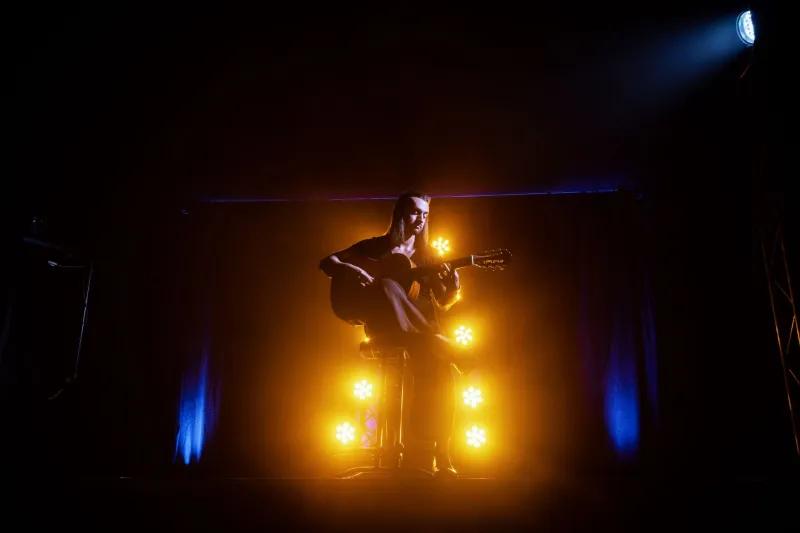
There's a version of the Wilko Johnson story that ends somewhere in the early eighties. The Dr. Feelgood years are over, the solo career has its moments but never recaptures the original fire, and the man himself becomes one of those figures who's revered by people who were there and largely unknown to everyone else. A cult legend. A footnote that deserves to be a chapter.
That version of the story is wrong. Or rather, it's incomplete in a way that misses the most interesting part entirely.
Commercial Irrelevance as Creative Liberation
There's a paradox at the heart of Wilko Johnson's later career, and it's one that says something uncomfortable about the music industry and about artistic ambition more broadly. The further he drifted from mainstream commercial relevance, the more powerful and authentic his work became. The less he had to prove — or perhaps the less he believed there was any point in proving it — the more freely and honestly he played.
This isn't a unique phenomenon in rock music, but Wilko's version of it is unusually pure. He was never really a commercial animal to begin with. The early Dr. Feelgood records weren't chasing chart success; they were chasing something rawer and more immediate. But there's still a difference between a young musician playing with that kind of urgency because he has something to establish and an older musician playing with it because he genuinely has nothing left to lose.
The second kind of urgency is different. It's quieter, in a way. More settled. And paradoxically, it communicates more.
The Daltrey Collaboration: An Unlikely Alchemy
When Wilko Johnson announced in 2013 that he had been diagnosed with terminal pancreatic cancer and had chosen to forgo treatment in order to continue touring, the response was one of those rare moments where the music press didn't quite know what to do. Here was a man facing his own death with what appeared to be genuine equanimity — even joy — and choosing to spend his remaining time doing the only thing he'd ever really wanted to do.
The album that came out of that period, Going Back Home, recorded with Roger Daltrey, shouldn't have worked as well as it did. On paper, it looked like a legacy project, a farewell gesture, the kind of thing that gets respectful reviews and then sits politely on shelves. In practice, it was something else. The combination of Wilko's guitar and Daltrey's voice — two men from very different corners of the British rock tradition, neither of them with anything left to prove — produced a record that felt genuinely alive.
Daltrey, to his enormous credit, understood what was needed. He didn't try to impose his own well-established grandeur on the material. He listened to what Wilko's guitar was doing and responded to it. The result was a conversation between equals, and it captured something that polished studio craft rarely does: the sense of two people actually present in a room together, playing for the love of it.
The Diagnosis and the Strange Gift It Gave
This is where the Wilko Johnson paradox gets genuinely complicated, and where easy narratives about triumph over adversity start to feel inadequate.
Wilko has spoken openly about how his terminal diagnosis — and the subsequent miraculous discovery that the tumour was operable, leading to surgery and survival — fundamentally altered his relationship to performance and to life itself. The period between the diagnosis and the operation was, by his own account, one of extraordinary psychological clarity. The usual anxieties and ambitions that cloud most people's existence simply fell away. He was free, in a way that most people never get to experience, from the noise.
You can hear that clarity in his playing from that period. There's no striving in it. No self-consciousness. He plays like someone who has already made his peace and is now just enjoying the conversation. It's the most relaxed, most direct guitar playing of his career — which is saying something, given that directness was always his defining quality.
The survival complicated things, in the most wonderful possible way. He got to bring that clarity back with him into a continued life. The question of whether he managed to hold onto it, or whether the ordinary noise of existence gradually reasserted itself, is one that only he can answer. But the work from that period stands as evidence of what's possible when a musician is truly, completely free of the need to impress.
What His Later Career Actually Proves
The conventional wisdom about rock legacies is that they're built in the early years and then spent, gradually, over everything that follows. Wilko Johnson's career is a sustained argument against that view.
His influence on British guitar music was established by the mid-seventies. But his meaning — the thing he actually represents, the values his career embodies — only became fully visible in the later chapters. The young Wilko was extraordinary. The older Wilko, the one who had survived illness and obscurity and the particular indignities of the music industry, was something rarer: a musician who had found out what he was actually for and was doing it without apology or embellishment.
The artists who have cited him as an influence in recent years — and there are many, across genres that he never directly worked in — aren't just referencing the early records. They're responding to the whole arc. To the proof that it's possible to spend a career in music without selling out, without chasing relevance, without letting the industry's priorities become your own.
That's not a small thing. In an era when the pressure to be commercially legible, algorithmically friendly, and perpetually reinventing yourself for new audiences is more intense than it has ever been, the example of a man who simply refused all of that — and got richer, artistically, for the refusal — is genuinely valuable.
Wilko Johnson didn't have a comeback. He had a continuation. And the continuation turned out to be the most honest part of the story.