Wired Differently: The Lasting Imprint Wilko Johnson Left on British Guitar Music
There's a moment on Roxette — the live version from Stupidity, Dr. Feelgood's barnstorming 1976 album — where Wilko Johnson's guitar sounds less like an instrument being played and more like a live wire dropped into a puddle. It's dangerous, twitchy, and utterly alive. And if you listen carefully enough, you can hear the future of British rock in every scratchy, staccato note.
Because that's the thing about Wilko. He wasn't just a guitarist doing his thing on a small stage in Essex. He was, whether he knew it or not, laying the groundwork for something much bigger. The ripples from that Canvey Island pond spread outward in ways that shaped punk, post-punk, garage rock, and the scrappier corners of the UK indie scene for decades to come.
The Blueprint Nobody Admitted They Were Following
Ask most British guitarists of a certain vintage who their influences are and you'll get the usual suspects — Clapton, Page, Hendrix, Townshend. But scratch the surface and Wilko Johnson's name keeps coming up, often with a slightly sheepish admission that they hadn't quite realised how central he was until they looked back.
Joe Strummer and Mick Jones were paying close attention to Dr. Feelgood in the mid-seventies. The Clash's early sound — that relentless, no-frills aggression, the refusal to faff about with unnecessary solos — owes more than a little to what Wilko was doing down in the pubs and clubs of south-east England. Strummer once described the Feelgoods as one of the key catalysts for what became punk, and it's not hard to see why. Here was a band playing raw, stripped-down rhythm and blues with a ferocity and working-class directness that made the bloated stadium rock of the era look frankly ridiculous.
Paul Weller, too, has been open about Wilko's influence. The Jam's choppy, rhythmic guitar style — particularly on early records — carries clear fingerprints of that Wilko approach: tight, percussive, economical. Not a note wasted. Weller understood instinctively what Wilko was doing, which was making rhythm guitar feel as visceral and exciting as lead.
Punk's Unsung Godfather
It's worth pausing on this, because it genuinely matters. Wilko Johnson played rhythm and lead simultaneously — a technique rooted in the Chicago blues tradition but filtered through his own restless, almost anxious energy. He didn't use a plectrum. He used his fingers, which gave his playing a particular texture: sharp, immediate, physical. When punk arrived and declared that less was more, Wilko had already been living that philosophy for years.
The Sex Pistols, the Damned, the Buzzcocks — all of them were operating in a cultural space that the Feelgoods had helped carve out. Not in terms of sound exactly, but in terms of attitude. The idea that you didn't need to be technically virtuosic. That you could be confrontational, urgent, and real. That a gig should feel like something was at stake.
This is the inheritance that Wilko left to British rock, and it's a profound one.
The Garage Rock Thread
Fast forward to the early 2000s and the garage rock revival — The Strokes in New York, yes, but also the Libertines, the Hives, and a clutch of scrappy British bands who suddenly made it cool again to play with your shirt untucked and your amp turned up. Wilko's influence is all over this era, even if it's filtered through several generations of transmission.
The Libertines, in particular, carry his spirit. Pete Doherty and Carl Barat's interlocking guitar parts, the raw live energy, the sense that anything might fall apart at any moment — it's a lineage that runs straight back through punk to the pub rock scene that Wilko helped define. Carl Barat has spoken warmly about early British rock and roll as a touchstone, and the Feelgoods are never far from that conversation.
More recently, bands like Shame, Idles, and Fontaines D.C. — all operating in that post-punk, guitar-driven space — are working in a tradition that Wilko helped establish. The directness, the physicality, the refusal to be polished: these are Wilko values, even if the bands themselves might not always name him explicitly.
What Made the Wilko Sound So Transferable
Part of the reason Wilko's influence has been so durable is that his approach is fundamentally about attitude rather than technique. You can learn his finger-picking style — and plenty of guitarists have tried — but what you're really learning is a mindset. Play like you mean it. Don't hide behind effects or studio trickery. Make the audience feel something.
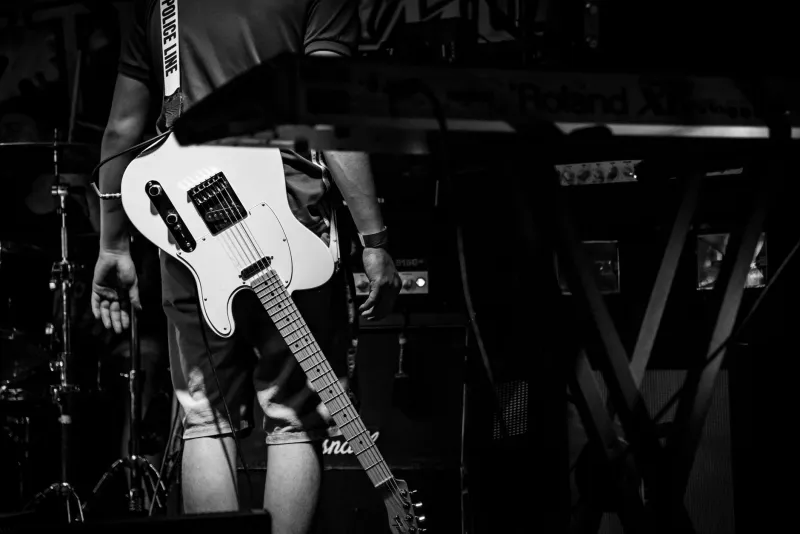
His tone was also remarkably simple. A battered Telecaster into a straightforward amp setup. No elaborate pedal boards, no nonsense. This simplicity made his approach accessible and, crucially, reproducible. Young guitarists watching him could think, I could do that — and then discover, of course, that they absolutely could not, because what looked simple was in fact the product of years of instinct and hard-won musicianship.
But the aspiration was there. And aspiration is everything.
Still Echoing
It would be easy to frame Wilko Johnson as a historical figure — an important stepping stone in the story of British rock — and leave it there. But that would be selling his legacy short. His influence isn't just historical; it's ongoing.
Every time a young guitarist in a rehearsal room somewhere in Birmingham or Bristol or Dundee decides to strip their sound back, to play harder and simpler and more honestly, they're working in a tradition that Wilko helped create. Every time a band decides that a gig should feel dangerous, that there should be electricity in the room — that's Wilko's ethos, still alive and still relevant.
The Canvey Island Killer might be gone, but the current he sent through British guitar music is still running. And if you press your ear to the right amp, you can still hear it buzzing.