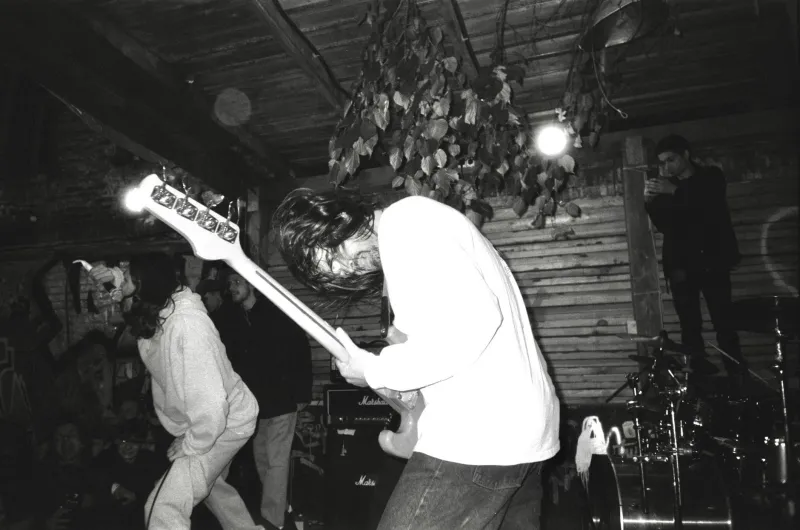
The Architecture of the Feelgood Sound: Wilko Johnson's Hidden Genius as a Songwriter

Ask most people what made Wilko Johnson special and they'll talk about the playing. The choppy right hand. The way he stalked the stage like a man possessed. The eyes. And fair enough — the technique was genuinely unlike anything else happening in British rock in the mid-seventies, and it's right that it gets celebrated.
But there's a risk in reducing Wilko to a guitar quirk, because it obscures something equally important: the man could write a song. Not just a riff, not just a hook — an actual, architecturally considered piece of music with internal logic, dynamic tension, and an arrangement that served the material rather than showing off the players. That's rarer than it sounds, and it's a big part of why Dr. Feelgood's best recordings have held up so well.
Setting the Table: What Wilko Was Working With
To appreciate what Wilko brought to songwriting, it helps to understand the constraints he was working within. Dr. Feelgood were, at their core, a four-piece built around the tension between his guitar and Lee Brilleaux's voice and harp. There was no keyboard player softening the edges, no second guitarist filling the gaps, no elaborate production to paper over cracks.
That leanness wasn't just an aesthetic choice — it was a structural challenge. Every song had to work with a very limited palette. And rather than treating that as a limitation, Wilko turned it into the defining feature of his compositional approach. The space between the instruments became as important as the instruments themselves.
She Does It Right: A Masterclass in Tension and Release
Take She Does It Right, the opening track from Down by the Jetty. On the surface it's a fairly simple blues-influenced rocker. But listen to the way Wilko manages the energy throughout the song. The verse guitar part is clipped and percussive, deliberately leaving gaps that create a kind of rhythmic anxiety. The chorus doesn't resolve that tension so much as redirect it — the band locks in tighter, the dynamic shifts, and then it's back to that coiled, expectant verse.
This is compositional thinking, not just playing. Wilko understood that a song needs somewhere to go, and he built that movement into the arrangement from the ground up. The guitar part isn't decorating the song — it is the song's structure.
Roxette: Rhythm as Architecture
If She Does It Right is about tension and release, Roxette is about momentum. It's one of the most purely kinetic things Dr. Feelgood ever recorded, and the reason it works is Wilko's almost obsessive commitment to rhythmic consistency. The guitar part doesn't vary much harmonically, but the rhythmic precision with which it's executed turns repetition into propulsion.
This is a compositional technique borrowed from funk and soul — the idea that rhythm itself can carry a song, that you don't need harmonic complexity if the groove is tight enough. Wilko applied that principle to a British R&B context and came up with something that felt entirely fresh. The arrangement is almost architectural in its simplicity: everything serves the forward motion, nothing is superfluous.
It's worth noting that this wasn't an accident of style. Wilko has talked about his admiration for musicians who understood rhythm as a structural element rather than just a backdrop. That intellectual engagement with the craft shows up directly in how he constructed his songs.
Back in the Night: The Art of the Slow Build
Not everything Wilko wrote was full-throttle attack. Back in the Night shows a different side of his compositional instincts — a slower, more atmospheric piece that demonstrates his understanding of dynamics and pacing. The arrangement breathes differently here, giving Brilleaux's vocal more room and shifting the guitar's role from rhythmic engine to something closer to a textural element.
The fact that this exists alongside the barnstormers is important. It shows that Wilko's compositional range was wider than his reputation sometimes suggests. He wasn't just writing vehicles for his guitar technique — he was writing songs that served the material, even when that meant pulling back.
The Arrangement Philosophy: Less as More
One of Wilko's most underappreciated contributions to the Dr. Feelgood sound was his instinct for what not to include. At a time when British rock was frequently drowning in overdubs, orchestration, and studio embellishment, Wilko was making deliberate choices to strip arrangements back to their essential components.
This wasn't simply a matter of budget or circumstance. It was a considered aesthetic position: that the energy of the performance was more valuable than the polish of the recording, and that adding layers risked diluting rather than enriching the music. That philosophy ran counter to much of what was happening in mid-seventies rock, and it's one reason the Feelgood recordings sound so contemporary even now.
The influence of that approach on punk and post-punk production is hard to overstate. When producers like Steve Lillywhite and Vic Maile were developing the stripped-back sound that defined British rock in the late seventies and early eighties, they were building on a foundation that Wilko had helped lay.
The Composer in the Shadows
Wilko Johnson's place in the British rock canon is secure, but it's been secured largely on the strength of his playing rather than his writing. That's understandable — the playing is spectacular and immediately legible in a way that compositional craft often isn't.
But spend time with the Feelgood catalogue and you start to hear the architecture underneath the surface. The careful management of tension. The rhythmic intelligence. The disciplined arrangements. The understanding that a song's structure is as much a creative statement as any individual performance within it.
That's a songwriter's mind at work. And it's time we gave it the credit it deserves.