The Wilko Way: A Guitarist's Guide to Playing Like You Mean It
Let's get one thing out of the way immediately: Wilko Johnson is not technically flashy in the conventional sense. He doesn't do sweep arpeggios. He doesn't noodle. There are no eight-minute solos, no whammy bar theatrics, no unnecessary ornamentation. And that, paradoxically, is precisely why studying his technique will make you a dramatically better guitarist.
Wilko's approach is about purpose. Every note he plays is there because it needs to be there. Every rhythmic chop serves the song. It's a masterclass in musical economy, and if you're a UK guitarist who's ever felt like your playing lacks a certain something — a rawness, a sense of forward momentum, a feeling that the music is genuinely dangerous — then this guide is for you.
Right, let's get into it.
The Finger-Picking Secret That Changes Everything
The first and most fundamental thing to understand about Wilko's technique is that he doesn't use a plectrum. He plays entirely with his bare fingers, and specifically with a downstroke-heavy approach that gives his rhythm playing its distinctive percussive snap.
Most guitarists who come up through the standard rock tradition learn to alternate pick — down, up, down, up — which produces a relatively even, flowing sound. Wilko's approach is far more aggressive. He drives down into the strings with his index and middle fingers, and the result is a harder, choppier attack that sits in a mix completely differently from conventional picking.
If you want to start experimenting with this, try playing a simple bar chord and hitting it with a firm downstroke using just your index finger. Feel how the attack is different — harder at the front, with the note decaying more sharply. Now try doing that in rhythm. It takes some getting used to, but once you've got it, you'll immediately hear why Wilko's rhythm parts have that almost percussive quality.
Simultaneous Lead and Rhythm: The Holy Grail
Here's the thing that makes Wilko genuinely unusual in the context of British rock. Dr. Feelgood never had a rhythm guitarist. Wilko handled both functions simultaneously, and if you listen carefully to the recordings, you can hear exactly how he did it.
The technique involves alternating very rapidly between chunky, chordal rhythm passages and single-note melodic runs, often within the same bar. The transitions are so quick and so seamlessly integrated that the effect is of two guitarists playing at once. It's a trick that takes real dedication to master, but even approximating it will immediately expand what you're capable of as a player.
A good exercise: take a simple 12-bar blues in E. On the I chord (E), play four beats of chunky rhythm. Then, on the turnaround, throw in a quick single-note run using the E minor pentatonic scale. Practise making that transition feel natural. Gradually speed it up and make the transitions more frequent. You'll start to hear the Wilko magic emerging.
The Telecaster and Why It Matters
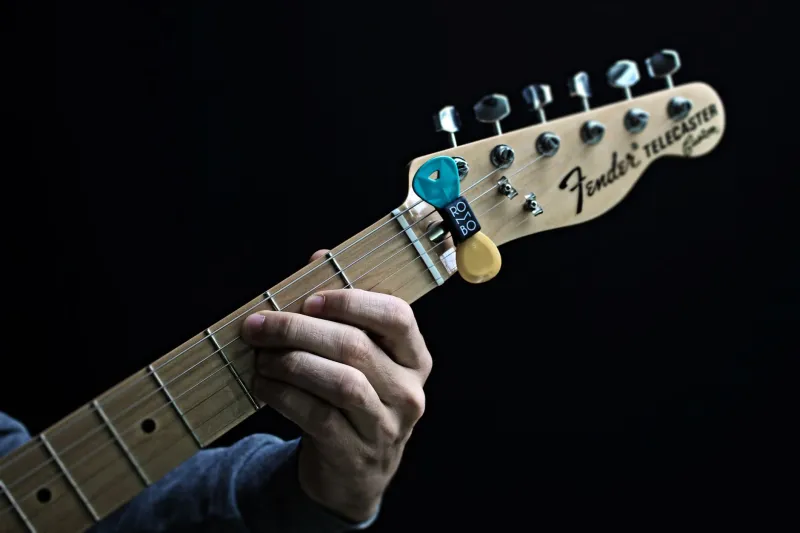
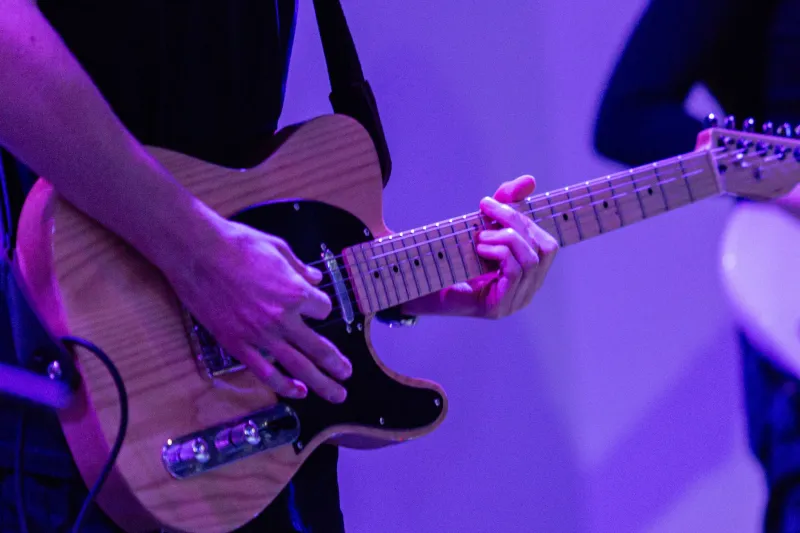
Wilko's weapon of choice has always been the Fender Telecaster, and this isn't incidental to his sound. The Telecaster has a natural brightness and snap to it — particularly in the bridge pickup position — that suits his percussive playing style perfectly. Where a Les Paul might smooth out and sustain, the Tele bites and then gets out of the way, which is exactly what Wilko's music demands.
His settings tend to be relatively clean — not a lot of gain, not a lot of reverb. He wants the attack of the guitar to be heard clearly, and excessive distortion would muddy that up. This is actually good news for beginners, because it means you don't need a particularly expensive or complicated setup to approximate his sound. A decent Telecaster (or a Squier if you're on a budget — no shame in that), a clean amp with a touch of treble, and you're most of the way there.
If you want to add a bit of grit, a mild overdrive pedal — something like a Boss BD-2 or a similar transparent drive — can work well. But resist the temptation to pile on the gain. Wilko's power comes from his hands, not his effects chain.
The Stare, the Stance and the Stage Presence
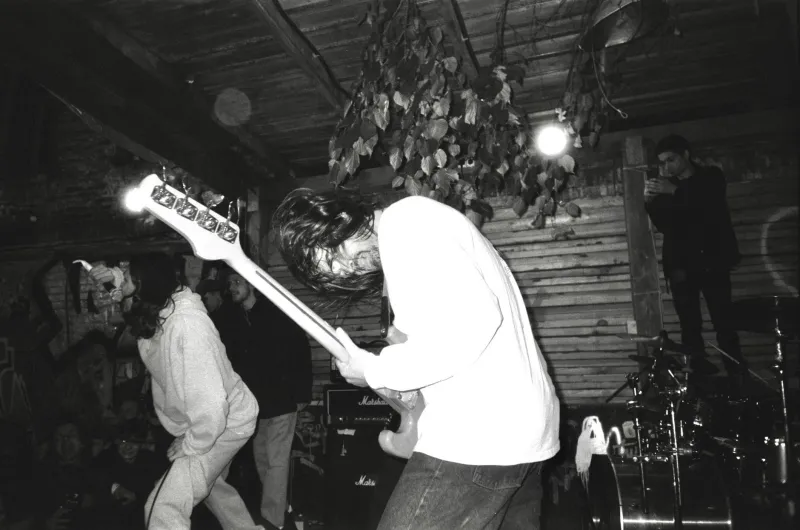
Okay, this is technically not a guitar technique, but bear with us, because it's actually relevant to how Wilko plays. His famous thousand-yard stare — that unnerving, wide-eyed expression he wears on stage, as though he's receiving transmissions from another dimension — isn't just theatrical. It's a reflection of the total physical and mental commitment he brings to performance.
Wilko has described the experience of playing live as almost trance-like, a state of complete absorption in the music. And you can hear that in how he plays. There's no self-consciousness, no holding back. Every performance sounds like it might be the last one, which is partly why his live recordings have such extraordinary energy.
The practical lesson here is about commitment. When you're practising or performing, try to get out of your own head. Stop monitoring yourself and start playing. It sounds simple but it's genuinely hard to do consistently, and Wilko does it better than almost anyone.
Key Tracks to Study
If you want to really get inside Wilko's head as a guitarist, here are the essential recordings to sit with:
'Roxette' (Dr. Feelgood, Down by the Jetty, 1975) — The choppy rhythm work here is a perfect introduction to his style. Listen to how the guitar drives the track without ever becoming cluttered.
'Back in the Night' (Dr. Feelgood, Malpractice, 1975) — A showcase for his melodic sensibility. The lead runs here are economical and perfectly placed.
'Going Back Home' (Wilko Johnson and Roger Daltrey, 2014) — The title track demonstrates that none of his fire diminished with age. If anything, the playing here is even more focused than his 1970s work.
'She Does It Right' (Dr. Feelgood, Stupidity, 1976) — The live version on Stupidity is the definitive Wilko Johnson performance. Study every second of it.
What You're Really Learning
Beyond the specific techniques, what studying Wilko Johnson teaches you is a philosophy of guitar playing. It's about serving the song, not your own ego. It's about finding the most powerful version of the simplest idea. It's about physicality and commitment and the idea that the electric guitar, when played with genuine conviction, is one of the most exciting objects a human being can hold.
That's the real masterclass. And it's available to any guitarist willing to put in the hours and listen carefully to a bloke from Canvey Island who worked it all out for himself.
Get your Tele out. Let's go.