How to Play Like Wilko: The Techniques, Mindset, and Sheer Bloody-Mindedness Behind the Canvey Sound
Ditch the Plectrum
Right, let's start with the thing that surprises most guitarists when they first learn about Wilko Johnson's technique: he doesn't use a pick. Never has. Instead, he uses his fingers — specifically, his index and middle fingers — to deliver those ferocious, staccato bursts of rhythm that define his sound. It's an approach more commonly associated with fingerstyle acoustic playing or classical guitar, and yet Wilko applied it to a plugged-in Fender Telecaster at volumes that would rattle your fillings loose.
The effect is immediately noticeable if you listen carefully. There's a particular sharpness to his attack — a snap to each note — that a plectrum simply doesn't produce in the same way. The flesh of the fingers hitting the strings creates a slightly rounder fundamental tone, but the nail — Wilko keeps his right-hand nails trimmed specifically for this purpose — adds a brightness that cuts through a band mix like a knife.
If you want to start exploring this technique, don't expect it to feel natural straight away. Most guitarists who've spent years with a plectrum will find their right hand completely confused for the first few weeks. Stick with it. Start slowly, focus on getting a consistent attack from both fingers, and gradually build up speed. The goal isn't to replicate Wilko note for note — it's to develop the kind of control that lets you do what he does: play rhythm and melody simultaneously without it sounding like a mess.
The Mick Green Inheritance
You cannot talk about Wilko's technique without talking about Mick Green, the guitarist who played with Johnny Kidd and the Pirates in the early 1960s. Green was Wilko's primary influence and the originator of the style that Wilko would eventually make his own.
Green's approach was rooted in necessity as much as invention. Johnny Kidd's band had no rhythm guitarist, so Green developed a way of playing that covered both roles simultaneously — chunky rhythm chords interspersed with melodic lead lines, all delivered with a driving, aggressive attack. Wilko heard this and was, by his own account, completely transformed.
"When I heard Mick Green, I just thought — that's it," Wilko has said in various interviews over the years. "That's what I want to do."
The lesson here for aspiring guitarists is an important one: great technique often comes from constraint. Green had no rhythm guitarist to lean on, so he became both. Wilko absorbed that lesson completely.
The Telecaster and Why It Matters
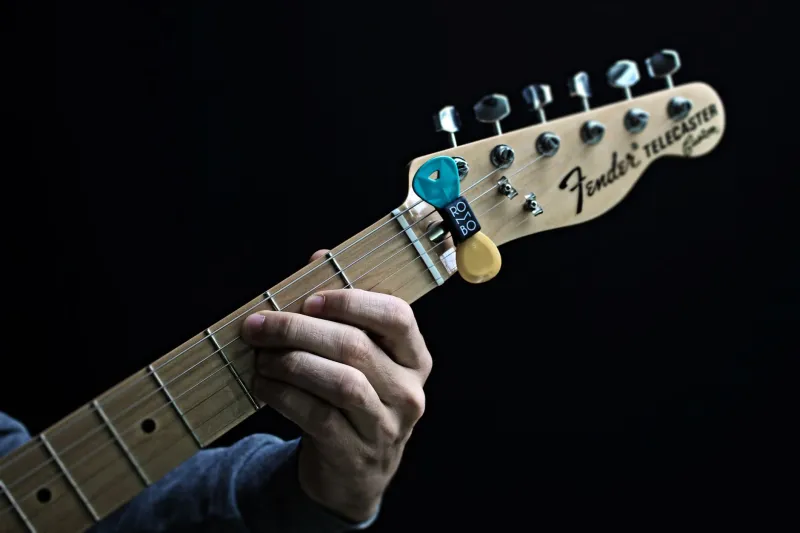
Wilko's guitar of choice is a Fender Telecaster, and this isn't incidental. The Tele is a notoriously unforgiving instrument — it exposes every mistake, every sloppy note, every hesitation. There's nowhere to hide behind elaborate electronics or a wall of effects pedals. What you play is what you get.
For Wilko, this suits his philosophy perfectly. He runs a relatively straightforward signal chain — Telecaster into amp, with minimal fuss — and relies entirely on his hands and the instrument to create his sound. This is worth remembering if you're trying to develop a similar approach: don't reach for the effects board when things sound wrong. Fix it at the source.
The Telecaster also has a particular midrange bite that works brilliantly for the choppy, rhythmic style Wilko favours. Those single-coil pickups cut through a band mix in a way that humbuckers simply don't, and the bridge pickup in particular — often considered too harsh by players who prefer a smoother tone — is absolutely central to the Canvey sound.
Rhythm First, Always
Here's the philosophical heart of Wilko's approach, and it's one that sets him apart from the vast majority of rock guitarists: he is, first and foremost, a rhythm player. In an era that worshipped the guitar solo — the Clapton era, the Page era, the Hendrix era — Wilko consistently prioritised the groove over the flash.
This isn't because he can't play lead guitar. It's a conscious choice rooted in a very particular understanding of what a band needs. Watch any live footage of Dr Feelgood at their peak and you'll see it immediately: Wilko is the engine of the whole thing. Lee Brilleaux could do what he liked vocally because Wilko was holding everything together with that relentless, choppy attack.
For guitarists, this is a genuinely radical idea worth sitting with. We're trained — by guitar magazines, by YouTube tutorials, by the culture of rock music itself — to think of the lead solo as the pinnacle of guitar playing. Wilko's entire career is an argument against that assumption. The rhythm part is the music. Everything else is decoration.
The Stare, the Strut, and the Stage Presence
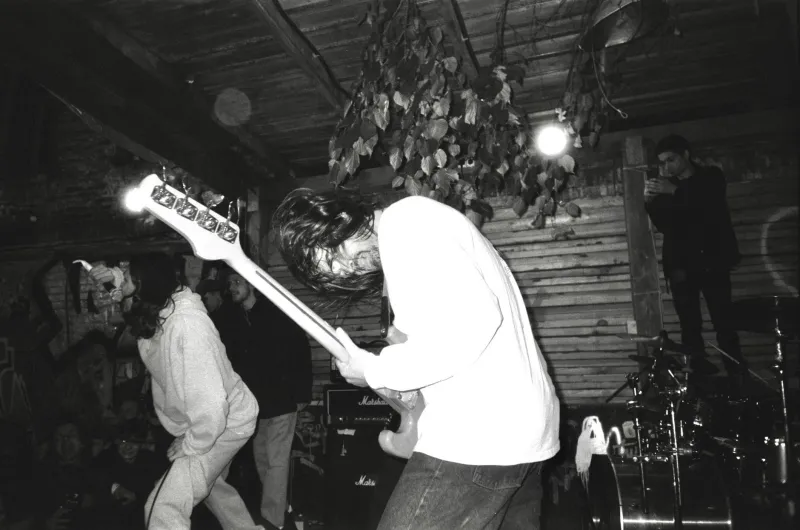
Okay, this isn't strictly a technique in the conventional sense, but it's impossible to discuss what Wilko Johnson does without addressing the physical dimension of his performance. That wide-eyed, slightly manic stare. The way he prowls the stage like he's looking for someone to argue with. The low-slung guitar and the rigid, almost robotic quality of his movement.
All of this is part of the music. Stage presence isn't separate from technique — it's an expression of the same internal state that produces the playing. When Wilko looks like he's about to explode, it's because something in the music is genuinely pushing him to that edge. The physicality is authentic, not performed.
For musicians working on their own stage presence, there's a lesson here: don't manufacture it. Find the thing in the music that genuinely moves you, and let that come out in your body. Wilko never looked like he was trying to be cool. He looked like a man in the grip of something he couldn't control. That's infinitely more compelling.
The Working-Class Ethic
Wilko Johnson came up in a tradition where you played because you had to, not because it was glamorous. The pub rock scene of the early 1970s was unglamorous by design — sweaty rooms, indifferent audiences, beer-soaked floors. You got tight because you had no choice. You developed your style because standing still wasn't an option.
This working-class ethos runs through everything Wilko does musically. There's no wasted motion, no self-indulgence, no noodling for its own sake. Every note serves the song. Every performance is given everything, regardless of the size of the crowd.
It's a philosophy that sits at the very heart of what this site celebrates. The ecstasy of Wilko Johnson isn't about technical perfection or commercial success. It's about that moment when a guitarist plugs in, locks into a groove, and makes a room feel genuinely alive. That's the Canvey Island sound. And it's available to anyone willing to put in the work.