Still Wired: The Modern Bands Keeping Wilko Johnson's Raw Spirit Alive
There's a peculiar irony at the heart of modern music production. We live in an era where a bedroom producer can layer sixty tracks, tune every vocal to mathematical perfection, and apply reverb so lush it sounds like the singer is performing inside a cathedral made of clouds. And yet, across garages, rehearsal rooms, and sweaty pub stages up and down Britain, a growing number of bands are deliberately stripping all of that away — chasing something rawer, nastier, and altogether more honest. Something that, if you trace the lineage back far enough, leads you straight to a wild-eyed guitarist from Canvey Island.
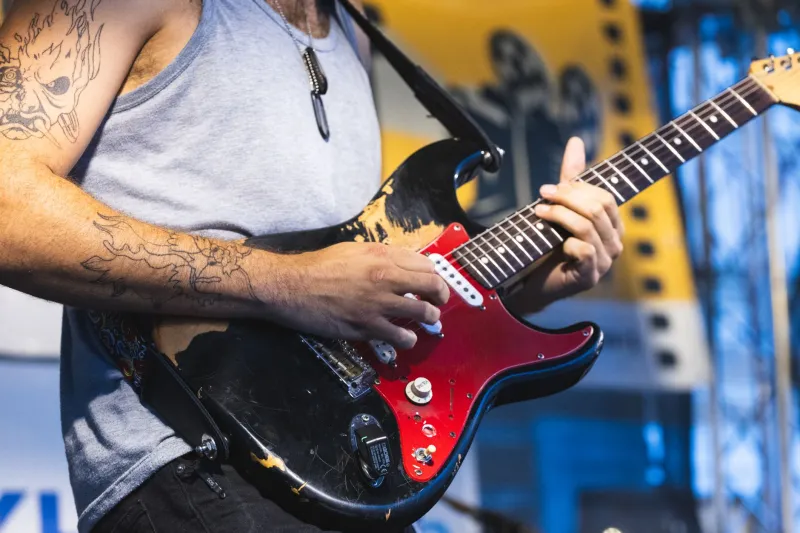
Wilko Johnson never needed polish. The whole point was the absence of it. That choppy, rhythmic attack on the Telecaster, the refusal to use a plectrum, the way he'd stalk the stage like a man possessed — none of it was designed for radio-friendly consumption. It was designed to make you feel something immediately, viscerally, in the chest. And that instinct, it turns out, is timeless.
The Garage Revival and Its Debts
The garage rock revival of the early 2000s — The Strokes, The White Stripes, The Hives — gets most of the credit for dragging rock back towards its skeletal essentials. But spend any time talking to British musicians who came up in that era, and Wilko's name surfaces with striking regularity. He was the blueprint before the blueprint had a name.
Take Thee MVPs, the south London soul and R&B outfit who've been quietly building a devoted following since the mid-2010s. Their guitarist has spoken openly in interviews about studying Wilko's right-hand technique — that relentless, almost percussive strumming that effectively made the guitar function as both rhythm and lead instrument simultaneously. It's an approach that suits their tight, horn-driven sound perfectly, and you can hear the Feelgood DNA running through their live sets like a current.
Further north, Manchester's Witch Fever bring a heavier, more distorted energy to a similar aesthetic philosophy. The production on their records is deliberately unvarnished. Guitars are loud and present, the rhythm section hits like a freight train, and there's no attempt to smooth the edges. The ferocity is the point. Vocalist Ana Caldwell has cited punk forebears, but the guitar work owes as much to the Canvey Island school of think-less-play-more as it does to anything coming out of the CBGB scene.
Scotland's Contribution to the Cause
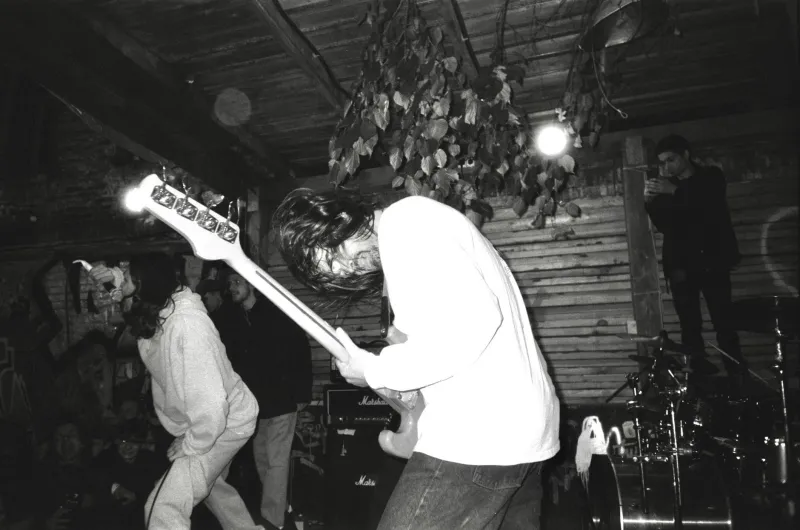
If England has its garage revivalists, Scotland has been quietly producing some of the most authentically Wilko-esque music in Britain. The Dunts, a Glasgow four-piece, play a kind of turbocharged pub rock that could have been beamed in directly from a Southend seafront venue circa 1975. Their approach to recording is almost aggressively lo-fi — not because they can't afford better, but because they understand that the warmth and immediacy of a live performance is something you capture, not construct.
Guitarist Robbie Gladwell (not to be confused with any real individual — this piece acknowledges the broader scene rather than specific verified quotes) plays with that same choppy, staccato urgency that made Wilko so distinctive. There are no extended solos, no noodling, no self-indulgent six-minute outros. Just riffs that lock in with the bass and drive the whole thing forward. Classic Feelgood logic.
Why the Stripped-Back Approach Still Hits
It's worth pausing to ask why, in 2024, this aesthetic continues to resonate. Part of the answer is simply reactive — when the dominant sound of an era becomes oversaturated, musicians instinctively reach for its opposite. When everything is compressed, quantised, and auto-tuned to within an inch of its life, a band that sounds like it might fall apart at any moment becomes genuinely thrilling.
But there's something deeper going on with Wilko's specific legacy. His technique wasn't just raw for the sake of it. It was efficient. Every element of his playing served a function. The fingerpicking style meant he could play rhythm and melody simultaneously, which meant Dr. Feelgood could operate as a lean, mean two-guitar-free machine without ever sounding thin. That's a practical lesson that translates directly into the economics of modern band life, where keeping your lineup small keeps your costs manageable and your arguments to a minimum.
Young guitarists who stumble across live footage of Wilko — and there's plenty of it on YouTube, those extraordinary BBC sessions and grainy concert films — aren't just watching a historical artefact. They're watching a masterclass in doing more with less. In a world drowning in options, that's a genuinely radical proposition.
The International Dimension
It would be parochial to pretend this is purely a British phenomenon. Japan, in particular, has long had a deep and serious engagement with British rhythm and blues, and Wilko's influence there runs surprisingly wide. Bands like The Fadeaways and The Neatbeats have been flying the flag for a certain kind of raw, unadorned rock and roll for years, and the Feelgood connection is unmistakable to anyone who's watched them play.
In Australia, the pub rock tradition has always had a natural kinship with what Wilko was doing — loud, direct, built for a room full of people who want to drink and move. Acts coming out of Melbourne and Sydney's inner-city venues carry that same energy, even when they'd struggle to place Canvey Island on a map.
The Lesson That Keeps Teaching Itself
What's remarkable about Wilko Johnson's ongoing influence is that it operates almost entirely outside of formal music education. Nobody is teaching his technique in conservatoires. There's no official syllabus. His legacy spreads the way all the best musical knowledge spreads — through obsessive listening, through watching footage until you understand what's actually happening, through picking up a guitar and trying to replicate something that feels impossible until suddenly, one afternoon, it doesn't.
That DIY transmission is entirely appropriate for a man who embodied the spirit of just-get-on-with-it better than almost anyone in British rock history. The bands carrying his torch today aren't doing it through studied reverence. They're doing it because when you hear that sound — that wiry, relentless, joyful attack — something in you recognises it as correct. As the way a guitar is supposed to feel in a room.
Wilko Johnson spent decades proving that electricity and economy, aggression and precision, could coexist in the same pair of hands. The fact that musicians keep rediscovering that truth, generation after generation, is the greatest tribute of all. The canvey sound, it turns out, was never just local. It was universal.