When the Amp Goes Quiet: What Wilko Johnson's Step Back From the Stage Actually Gave Us
There's a particular kind of grief that music fans know well — the moment you realise a favourite artist has played their last show, whether they've announced it or not. With Wilko Johnson, that moment arrived in layers, drawn out over years of illness, recovery, and a gradual, dignified retreat from the grind of live performance. And yet, something unexpected happened in the space he left behind. The conversation about what he meant — to British rock, to guitar playing, to the whole messy idea of what it means to perform with genuine abandon — got louder, not quieter.
That's worth sitting with for a moment.
The Myth of Constant Presence
We live in an era that rewards relentless output. Streaming platforms are hungry beasts. Algorithms favour artists who drop singles every six weeks, who post daily, who exist in a state of perpetual creative visibility. The implicit message to musicians is clear: stop, and you'll be forgotten. Keep moving or get buried.
Wilko Johnson, by the very nature of his later years, became a quiet rebuke to all of that.
His decision — partly chosen, partly forced upon him by the pancreatic cancer diagnosis in 2013 that he initially believed would kill him — to pull back from the relentless touring circuit he'd inhabited for decades ended up doing something counterintuitive. It froze him in amber, in the best possible way. The recordings didn't stop mattering. The footage didn't age. The stories people told about seeing him live became more precious, not less. When you can't just pop along to the next gig, the gigs you remember take on a different weight entirely.
The Diagnosis That Changed Everything (And Nothing)
It's impossible to talk about Wilko's later legacy without acknowledging what happened after that cancer diagnosis. He went public with it, announced a farewell tour, recorded Going Back Home with Roger Daltrey, and prepared — with remarkable composure — to die. Except he didn't. Surgery in 2014 removed the tumour and gave him years he hadn't expected.
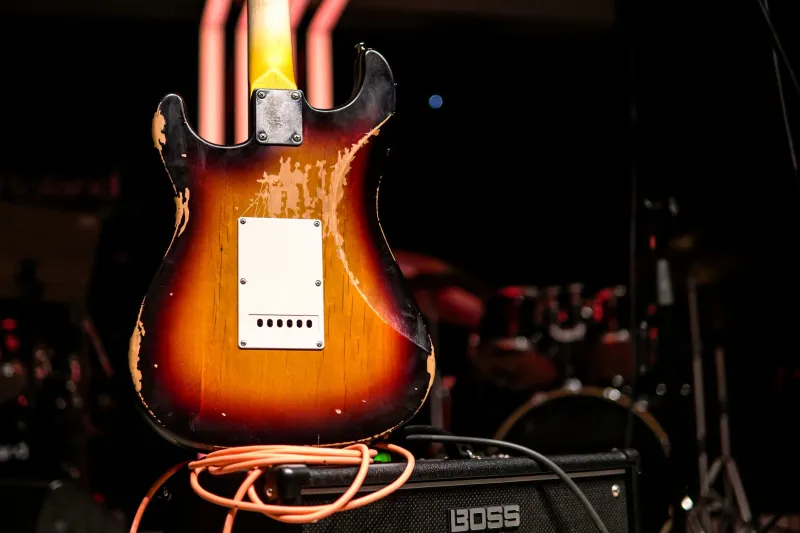
What that whole episode did, though, was crystallise something. People who'd taken Wilko for granted — who'd assumed he'd always be there, prowling a stage somewhere in a black suit, that Telecaster slung low, eyes wide and wild — suddenly had to confront the possibility of a world without him. And in doing so, they had to actually articulate what he meant to them.
That articulation is legacy in real time. It's rare to witness it while the artist is still alive.
The interviews he gave during that period — thoughtful, funny, deeply philosophical — added new dimensions to how people understood him. Here was a man who'd spent decades being described primarily through his physicality, his stage presence, his almost frightening intensity as a performer, suddenly revealing a rich inner life shaped by literature, by his time in India, by a genuine engagement with the big questions. The stepping back, in a sense, let people see him whole.
Quality, Scarcity, and Why Less Really Can Be More
There's an economic concept called scarcity value that applies here in a way that feels almost uncomfortably apt. When something becomes rare, its perceived worth increases. But that's too cold a frame for what happened with Wilko. This wasn't manufactured scarcity — it was real, human, and rooted in mortality.
What it produced, though, was a kind of critical reassessment that busy, prolific careers rarely invite. When an artist is constantly releasing material, the conversation is always about the new thing. What Wilko's later years offered was the chance to go back — to Stupidity, to Malpractice, to those early John Peel sessions — and listen without the noise of new product cluttering the air.
Younger guitarists, particularly those in the UK who'd grown up hearing vague references to Dr. Feelgood without quite understanding what the fuss was about, started digging. And what they found wasn't some dusty historical artefact. It was music that sounded like it had been recorded about twenty minutes ago, in terms of its energy and relevance. That's not something that happens by accident. It happens when the work is genuinely extraordinary.
The Streaming Age Paradox
Here's the thing about Spotify and its ilk that doesn't get said enough: they're brilliant archives. Whatever their failings as income generators for musicians, they do preserve and surface music in ways that previous formats couldn't. A teenager in Leeds or Luton who's never heard of Canvey Island can stumble onto She Does It Right via an algorithm, have their head completely turned around, and go down a rabbit hole that leads them to understanding an entire strand of British rock history.
Wilko's reduced presence in the live world, paradoxically, made him more discoverable in the digital one. There was no constant churn of new releases to navigate. Just the catalogue, sitting there, patient and ferocious, waiting to be found.
Several younger British artists — particularly those operating in the garage rock and pub rock adjacent spaces — have cited him as a revelation discovered precisely this way. Not through seeing him live, not through parental recommendation, but through the strange serendipity of a streaming platform deciding their listening history suggested they might like something raw and wired from 1975.
What Legacy Actually Looks Like
We tend to think of legacy as something that gets assessed after the fact, once the artist is gone and the obituaries are written. Wilko Johnson complicated that model. His later years — the illness, the unexpected survival, the gradual withdrawal from touring — created a kind of living legacy assessment, a rolling conversation about what he'd built and why it mattered.
And the conclusion that conversation kept arriving at was this: it mattered because it was real. The aggression wasn't performed. The joy wasn't manufactured. The rawness wasn't a stylistic choice layered over something more polished underneath. What you heard was what there was — a man from a flat, flood-prone island in the Thames Estuary who'd found a way to turn everything he felt into electricity.
You can't fake that. And you can't manufacture the kind of respect it eventually earns, either.
When the amp finally goes quiet, what's left is the truth of what was played. In Wilko Johnson's case, that truth is loud enough to rattle windows for decades yet.