Attitude Over Acrobatics: The Quiet Revolution Wilko Johnson Started in British Rock
Let's be honest about something upfront: Wilko Johnson was not a technically exceptional guitarist by the standards that guitar culture has traditionally used to measure such things. He didn't play fast runs. He didn't execute complex chord voicings. He didn't have a vast repertoire of techniques or a tone that required years of equipment obsession to achieve.
What he had was something that turned out to be considerably more valuable: an absolutely unshakeable sense of what he was doing and why.
And in demonstrating that — night after night, record after record, in venues across Britain and eventually the world — Wilko Johnson quietly dismantled one of rock music's most persistent myths. The idea that technical mastery is what separates the great guitarists from everyone else.
The Context Matters
To appreciate what Wilko was up against, you need to understand what British rock guitar looked like in the early-to-mid 1970s. This was the era of the guitar god. Eric Clapton, Jimmy Page, Jeff Beck — musicians who had elevated technical facility to something approaching religion. The music press worshipped at the altar of the solo. The longer, the more complex, the more demonstrably difficult, the better.
Progressive rock had taken this tendency and extended it to near-absurdity. Guitar solos stretched across entire sides of albums. Albums themselves became exercises in demonstrating how much music a band could fit into a single concept. More notes, more time signatures, more equipment, more everything.
Into this environment walked a bloke from Canvey Island who played rhythm and lead simultaneously, used no effects pedals, and considered a solo that lasted longer than thirty seconds to be a waste of everyone's time.
What Wilko Actually Did
The technique Wilko Johnson developed — and it is a technique, properly understood — involved using his right hand to simultaneously play bass lines and rhythmic chops while his fretting hand handled the melodic elements. It sounds simple when you describe it. It isn't, particularly, when you try to execute it with his precision and at his speed.
But the point isn't the difficulty. The point is the effect. What this approach created was a guitar sound that was rhythmically self-sufficient, that drove a band forward without needing to lean on the drummer or bassist for momentum. The guitar was the engine.
And crucially, it was a sound built entirely in service of the song and the feeling. There was no moment in a Wilko Johnson performance where you sensed him thinking about his own playing. The technique was so internalised that it disappeared, leaving only the music.
This is, arguably, the highest form of musicianship — not the ability to play difficult things, but the ability to make technique invisible in service of expression. Wilko achieved this. Many far more technically accomplished guitarists never do.
The Values Shift
What's interesting is the way Wilko's approach gradually reframed what audiences and musicians valued in guitar playing, even when they weren't consciously aware of it happening.
Punk is the obvious inflection point. When the punk movement arrived in 1976-77, it explicitly rejected technical virtuosity as a value, and Dr. Feelgood were frequently cited as precursors — proof that raw energy and emotional directness could be more powerful than any amount of technique. The Stranglers, The Clash, The Jam — all of them absorbed the lesson that Wilko had been teaching for years.
But the influence ran deeper than punk. It ran into post-punk, into the indie guitar tradition that followed, into the various garage and R&B revivals that have periodically refreshed British guitar music ever since. Each time, the core argument was the same one Wilko had made: conviction is the thing. Everything else is secondary.
The Dangerous Idea
There's a genuinely radical idea embedded in Wilko Johnson's guitar playing, and it's worth stating it clearly: emotional authenticity is more important than technical achievement.
This is dangerous because it's true, and because it's uncomfortable for anyone who has invested heavily in technical development. If Wilko is right — and the evidence suggests he is — then ten thousand hours of scales and exercises will get you exactly nowhere if you don't have something real to say with the instrument.
Conversely, if you have something real to say, the technique will find itself. It will be exactly as complex as it needs to be and no more. The music will be direct because directness serves the feeling, and everything that doesn't serve the feeling will fall away.
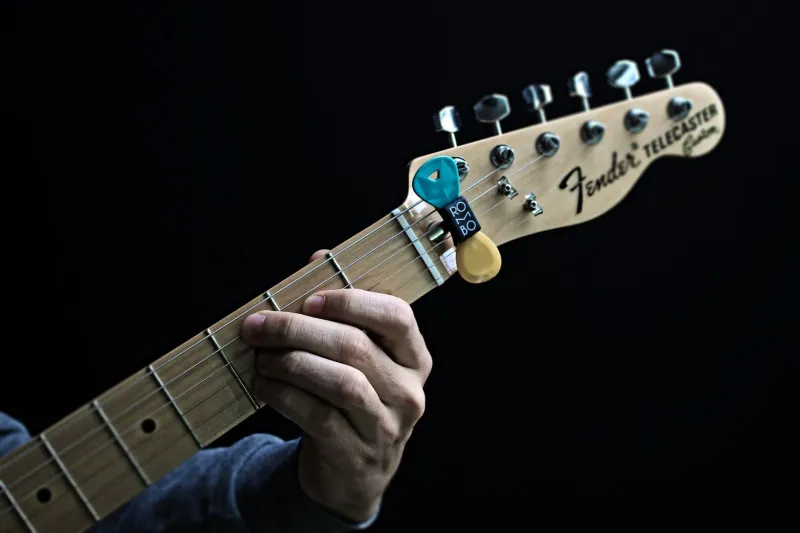
This is a remarkably Buddhist argument for a man in a black suit playing three-chord R&B on a Telecaster. But there it is.
What Modern Guitar Culture Does With This
Contemporary guitar culture is genuinely conflicted about these questions. On one hand, the internet has made technical display more visible than ever — YouTube tutorials, Instagram reels of people playing impossibly fast things, a constant stream of content designed to demonstrate ability. The shredder never went away; he just found a new platform.
On the other hand, the bands that have genuinely connected with audiences in the past decade — the ones with real cultural traction rather than just impressive view counts — tend to be the ones who've followed Wilko's instinct. Less display, more feeling. Less complexity, more directness.
The music press has noticed. The conversation around guitar playing has shifted perceptibly, away from what you can do toward what you're saying. Wilko Johnson is rarely cited explicitly in these discussions, but his fingerprints are everywhere in the argument.
Why It's Still a Good Thing
Wilko Johnson's challenge to the assumptions of 1970s guitar culture was, in the end, a challenge to a kind of dishonesty. The idea that technical difficulty equals musical depth is a comfortable lie that benefits musicians who are technically impressive but emotionally inert. Wilko exposed it simply by being more compelling than all of them.
The fact that this lesson keeps needing to be relearned — that each generation of musicians has to discover it fresh — doesn't diminish its importance. It just confirms that it's a genuine truth about music rather than a period-specific preference.
Wilko Johnson played guitar like a man with something to say. That turned out to be the most radical thing anyone could do. It still is.