Three Chords, Last Orders: How 'Back in the Night' Became the Sound of a Nation Knocking Off
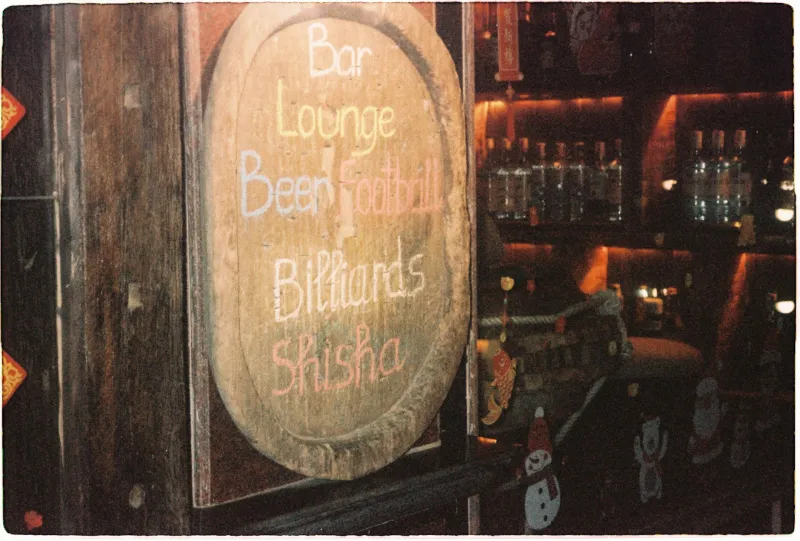
There's a particular kind of song that doesn't need a music video or a radio plugger or a sympathetic DJ at Radio 1. It just needs a jukebox, a Friday night, and a room full of people who've had enough of the week. 'Back in the Night' is that song. Has been for decades. Probably always will be.
Wilko Johnson wrote it lean. No fat, no filler, no attempt to impress anyone who wasn't already in the room. And that, perhaps more than anything, is why it stuck.
The Economics of the Thing
There's a temptation, when writing about Wilko Johnson's guitar work, to reach for technical language — to talk about his fingerpicking economy or the way he played rhythm and lead simultaneously with one hand. All of that's true and all of it matters. But 'Back in the Night' works for reasons that have nothing to do with technique and everything to do with feel.
The riff is immediate. You don't need to have heard it before to know where it's going. That's not an accident — it's craft disguised as instinct. Wilko understood, in a way that a lot of his contemporaries didn't, that the most powerful music meets people where they already are rather than dragging them somewhere unfamiliar. Working men in Southend didn't want to be challenged on a Thursday evening. They wanted to feel something true. 'Back in the Night' delivered that in under three minutes.
What makes the composition remarkable is what's missing. There are no decorative runs, no extended solos that demand your attention and reward your patience. The song trusts itself. It plants a flag and stands on it. That kind of confidence is genuinely rare.
Pubs, Clubs, and the Informal Canon
Britain has always had a parallel music culture running alongside whatever the mainstream decided was important. The working men's club circuit — once enormous, now diminished but far from dead — operated on its own terms, with its own stars and its own sense of what constituted a good night out. Wilko Johnson and Dr. Feelgood slotted into that world with surprising ease, even though they were ostensibly a rock band from the Thames Estuary rather than a cabaret act from Barnsley.
The reason was simple: they played like they meant it, and 'Back in the Night' sounded like lived experience rather than performance. When Lee Brilleaux snarled through those verses and Wilko's guitar locked into that groove, something happened in a room that you can't manufacture. People recognised it. Not because they'd heard it before, necessarily, but because it resonated with something they already carried around.
By the late 1970s, the song had acquired a kind of unofficial status in certain venues. Not through any promotional campaign, but through repetition and word of mouth — the oldest distribution network in the world. Cover bands picked it up. Tribute acts built sets around it. Local guitarists learned it in bedrooms in Wolverhampton and Wigan and Whitechapel, not because it was fashionable but because it was achievable and because it was good.
The Football Connection
It's worth pausing on the football terraces, because that's where 'Back in the Night' found one of its stranger second lives. British football culture in the 1970s and 1980s was deeply entwined with a certain kind of rock and roll — not the progressive kind, not the art school kind, but the direct, physical, confrontational kind. Wilko Johnson's music fitted that mood perfectly.
You'd hear snatches of the riff on the terraces, hummed or whistled or occasionally bellowed with more enthusiasm than accuracy. It wasn't the official soundtrack to anything. Nobody had licensed it or cleared it or decided it was on-brand. It just happened, organically, because the song had entered the bloodstream of a certain demographic and wouldn't leave.
That kind of cultural adoption can't be bought. It can barely be encouraged. It just either happens or it doesn't, and with 'Back in the Night' it happened repeatedly, in different places, across different generations.
Why Complexity Loses and Simplicity Wins
There's a broader point here worth making, because it applies to a lot of music that gets overlooked in favour of the technically impressive. Complexity creates admiration. Simplicity creates connection. Those are two very different things, and the music industry has always had trouble telling them apart.
The prog rock explosion of the early 1970s produced extraordinary musicians making extraordinary music that left a lot of ordinary people cold. Wilko Johnson, working in parallel, made music that felt like it was for you rather than at you. 'Back in the Night' doesn't ask anything of its audience except their ears and their willingness to be in the moment. That's a generous offer.
The staying power of simple, honest rock and roll is something the industry rediscovers every decade or so, usually with great surprise. Wilko Johnson never forgot it. He built his entire approach around it.
A Legacy Measured in Repetitions
Decades on, 'Back in the Night' still turns up in places that matter more than chart positions. It's in the set lists of bands who weren't born when Dr. Feelgood were at their peak. It's in the muscle memory of guitarists who learned it as their first proper riff and never fully moved on. It's in pubs where the jukebox hasn't been updated since 2003 and nobody's complaining.
That's the kind of legacy that doesn't come with a plaque or a ceremony. It comes with repetition and recognition — with the moment someone hears those opening notes and says, without thinking, oh yeah, this one.
Wilko Johnson wrote a lot of great songs. But 'Back in the Night' is the one that found its way into the furniture of British life and decided to stay. Some songs don't need the mainstream. They just need the right rooms, the right nights, and enough time to prove themselves.
This one had all three.