Diagnosis, Defiance, and the Doctor's Orders: How Wilko Johnson Rewrote Rock's Relationship With Mortality

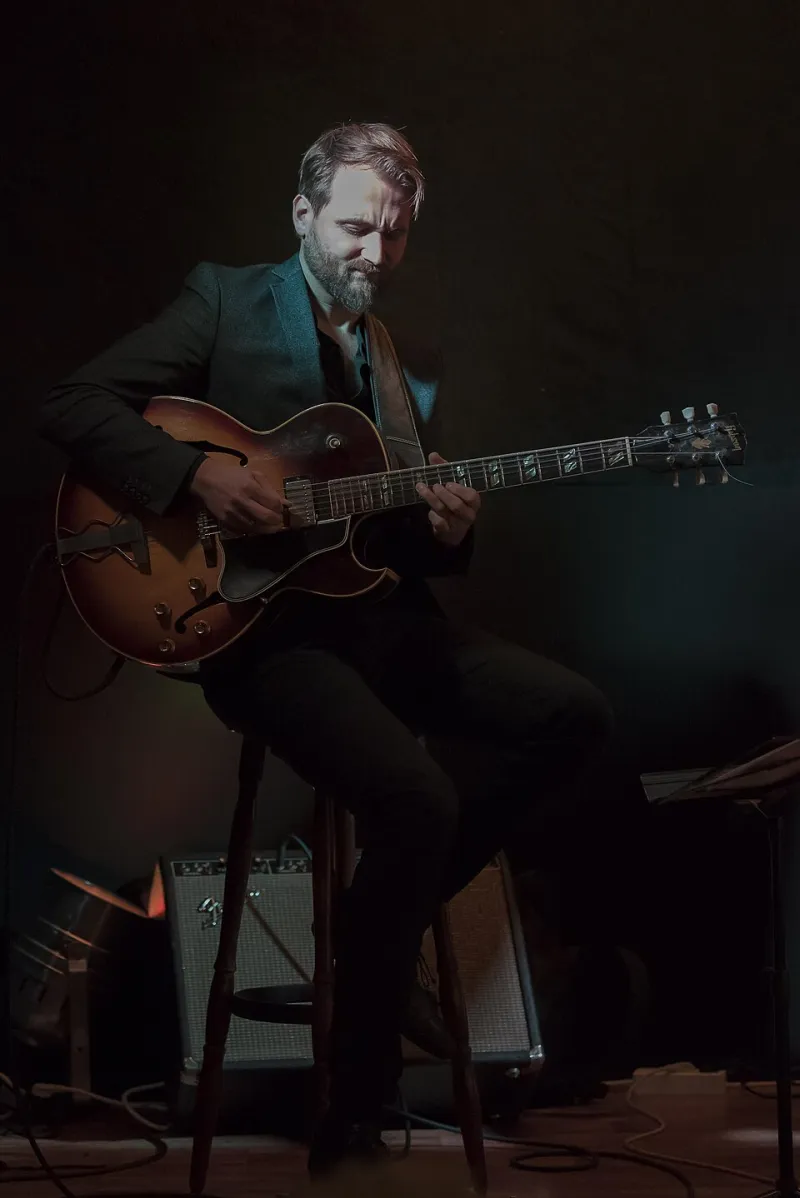
Photo: Uprising Man, CC BY-SA 4.0, via Wikimedia Commons
Rock music has always had a complicated relationship with dying. The mythology is well established: live fast, burn bright, exit young and legendary. From the 27 Club to the endless parade of excess-as-art-statement, the genre has often treated self-destruction as a kind of credential. Then along came Wilko Johnson in 2013, looked death square in the face, and did something the mythology had never quite prepared us for. He found joy.
The Announcement Nobody Expected
In January 2013, Johnson told the world he had been diagnosed with pancreatic cancer. The prognosis was as bleak as it gets — the disease is notoriously aggressive, and his doctors were not optimistic. He was given somewhere between nine and ten months. He was 65 years old.
What followed immediately was not withdrawal or despair. Johnson announced a farewell tour. He said he felt, for the first time in years, completely alive. The diagnosis had, by his own account, stripped away every anxiety, every petty irritation, every distraction. He was left with pure clarity. And he wanted to play.
For anyone following from the outside, this was almost incomprehensible. Here was a man who had been told he was dying, and his response was to get back on stage with renewed ferocity. British audiences, who had always had a particular affection for Johnson — the Canvey Island kid who'd given them some of the most honest rock and roll of the seventies — found themselves watching something genuinely extraordinary unfold.
Going Out on His Own Terms
The farewell shows were not mournful. People who attended them consistently reported the same thing: an atmosphere of fierce celebration rather than sad farewell. Johnson was, by multiple accounts, playing with an intensity that matched — and in some cases exceeded — anything he'd managed in his prime. There was nothing elegiac about it. If anything, there was fury. A refusal to diminish.
He also recorded an album with Roger Daltrey — Going Back Home — that arrived in 2014 to widespread critical acclaim. The record is raw, direct, and full of a specific kind of urgency that you can't manufacture in a studio. It sounds like a man who has decided that every remaining note matters. Daltrey, to his credit, understood the assignment. The two of them produced something that stands as one of the more remarkable late-career documents in British rock.
The album went to number three in the UK charts. A man who had been told he was dying had just made one of the biggest records of his career. The industry, which tends to be fairly unsentimental about these things, couldn't quite believe what it was seeing.
The Twist Nobody Saw Coming
In late 2013, Johnson underwent surgery at Addenbrooke's Hospital in Cambridge. The surgeon, Professor John Primrose, removed a tumour that turned out to be a rare, slow-growing form of cancer rather than the standard pancreatic variety originally diagnosed. The operation was a success. Wilko Johnson was not dying after all.
The reaction to this news was — understandably — one of enormous relief and celebration. But it also raised a question that nobody quite knew how to articulate. What do you do with the experience of having genuinely prepared to die, having lived through those months of clarity and purpose and absolute presence, and then been handed your life back?
Johnson, characteristically, didn't make a great philosophical performance of it. He got on with things. He kept playing. But the experience had clearly left its mark — not as trauma, but as a kind of permanent recalibration. He had learned something during those months that most people never get the chance to learn while there's still time to use it.
What Rock and Roll Got Wrong
The rock mythology around mortality tends to run in one of two directions. Either you die young and become immortal, or you survive into awkward middle age and spend the rest of your career trying to recapture something that's already gone. Neither narrative has much room for what Johnson actually did — which was to face the prospect of death with clear eyes, find meaning in it, make extraordinary work because of it, and then walk out the other side with his dignity entirely intact.
There's a broader cultural point here too. Johnson's illness coincided with a growing conversation — particularly in Britain — about how men handle vulnerability, how we talk about illness, and whether the old stoic model of simply not discussing these things is actually serving anyone. Johnson didn't perform stoicism. He was open about what he was going through, direct about how it felt, and completely uninterested in pretending it wasn't happening. In doing so, he modelled something that the rock world — not historically great at emotional honesty — genuinely needed to see.
The Legacy of the Whole Episode
Some musicians are defined by their playing. Some by their songwriting. Some by the sheer force of their personality. Johnson is all three, but the 2013 chapter added something else to the picture — a demonstration of what genuine resilience actually looks like, as opposed to the performative toughness that rock has always confused with the real thing.
He didn't rage against the dying of the light in a self-pitying way. He didn't make his illness into a brand. He picked up his guitar, stepped onto the stage, and played like every note was the last one. Which, for a while, he genuinely believed it might be.
That's not a rock and roll story in the traditional sense. It's better than that. It's a human story — about clarity, about purpose, about what happens when the noise drops away and you're left with only what genuinely matters. The NHS gave Wilko Johnson his life back. What he did with that second chance was entirely his own.