Beautiful Wreckage: How Wilko Johnson Turned Imperfection Into a Rock and Roll Manifesto

There's a moment on a live Dr. Feelgood recording — one of those gloriously scrappy early gigs captured on tape before anyone really knew what they had — where Wilko Johnson's guitar lurches sideways mid-riff. Not a clean bend, not a deliberate stylistic choice you'd find in any textbook. Just a raw, slightly unhinged lurch that sounds like the instrument itself is trying to escape. And then he catches it, drags it back, and keeps moving. The whole thing lasts maybe a second and a half.
It is, without question, one of the most thrilling moments in British rock history.
Not because it's technically brilliant. Because it isn't.
The Cult of the Clean Take
To understand what Wilko was doing — or rather, what he was deliberately not doing — you have to remember the world he was playing in. The mid-seventies were the era of the extended solo. Of bands disappearing into residential studios for months at a time, obsessing over overdubs, tuning every note to within an inch of its life. Progressive rock had turned technical proficiency into a kind of religion. If you couldn't play in seven-eight time while simultaneously referencing a medieval madrigal, were you even trying?
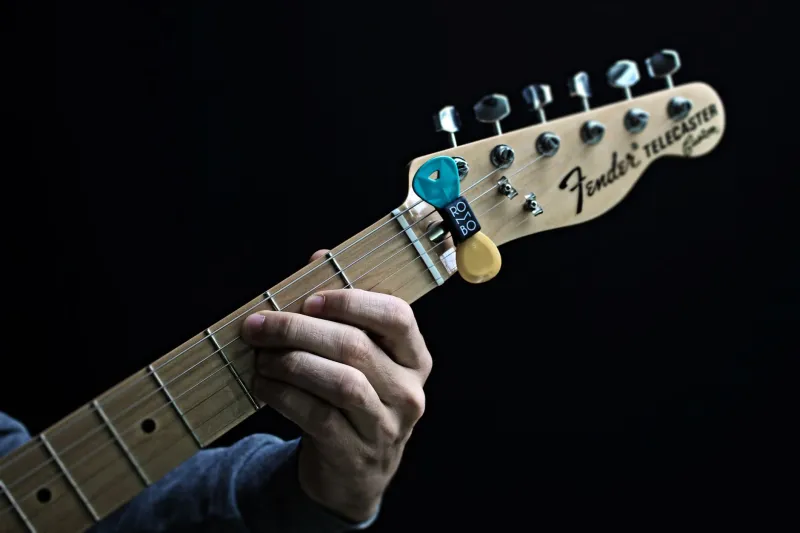
And then there was Wilko Johnson, prowling across a stage like a man receiving transmissions from somewhere slightly outside normal reality, playing a battered Telecaster with both hands and absolutely zero interest in whether any of it landed perfectly.
His approach wasn't the result of limited ability. Anyone who's studied his playing closely knows there's genuine sophistication buried in those choppy, machine-gun rhythms — a simultaneous fingerpicking and strumming technique that most guitarists will tell you is harder than it looks. The apparent chaos was the product of a very specific, very deliberate philosophy. Wilko simply believed that rock and roll had no business being tidy.
Spontaneity as Structure
What made his 'imperfect' playing so revolutionary was the way it reframed what a mistake even meant in a live context. In the studio-perfectionist model, an unplanned note was a problem to be fixed. In Wilko's world, it was information — evidence that something real was happening, that the music was alive and slightly out of control.
Watch footage of him performing 'She Does It Right' or 'Back in the Night' and you'll notice something strange. The tightness of the rhythm section — Sparks on bass, The Big Figure absolutely immovable behind the kit — creates this rigid, almost mechanical backdrop. And against that, Wilko's guitar is darting and jabbing and occasionally going somewhere unexpected. The contrast is what generates the electricity. It's not chaos versus order. It's chaos inside order, which is an entirely different and far more interesting thing.
There's a reason those early Feelgood gigs felt dangerous. It wasn't just the amphetamine energy, or the Thames Estuary scowl, or the way Wilko stalked the stage like a man who'd just received some very bad news. It was the genuine sense that the music could detonate at any moment. That feeling doesn't come from rehearsal. It comes from a guitarist who has actively decided not to file the edges down.
Against the Grain
It's worth contrasting this with what was happening elsewhere on the British guitar scene at the same time. Eric Clapton was in his Slowhand phase — meticulous, lyrical, every note considered. Jimmy Page was layering guitars in quadruplicate. Even the more raw end of the market, your Rory Gallaghers and your early Thin Lizzys, still operated within a framework where technical credibility mattered enormously.
Wilko rejected all of that. Not out of ignorance, but out of conviction. He'd been shaped by the choppy, urgent rhythms of early American R&B — Micky Jupp, Johnny Kidd and the Pirates, the kind of music that valued momentum over finesse. He understood instinctively that rock and roll is fundamentally about feeling, and that feeling doesn't always survive the journey to perfection.
What he was doing, though none of the critical vocabulary existed for it yet, was essentially pre-empting punk by several years. The Sex Pistols and their ilk would later make a virtue of amateurism, but Wilko's approach was subtler and in some ways more radical. He wasn't celebrating not being able to play. He was arguing that being able to play and still choosing rawness was a more honest artistic position than hiding behind technique.
The Moments That Made the Legend
There are specific performances where this philosophy crystallises into something almost transcendent. The Stupidity live album, recorded at Southend Kursaal in 1975, is probably the best document of it — a record so full of barely-contained energy that it sounds like it might spontaneously combust in your speakers. Wilko's playing throughout is extraordinary precisely because it never quite settles. There are moments where the rhythm guitar threatens to overwhelm everything, where a lick goes somewhere you don't expect, where you can almost hear him deciding in real time what comes next.
Or watch the Old Grey Whistle Test footage from the same era. On television, where most bands tightened everything up and played it safe, Wilko looks like he's performing a completely different version of the song to the one he rehearsed. Not worse. Stranger. More alive.
That quality — the sense of genuine, unresolved spontaneity — is almost impossible to manufacture. You can't fake it in post-production. You can't rehearse your way into it. It requires a performer who has fundamentally made peace with the idea that the music might not go exactly where they planned, and has decided that's not a problem to be solved but a feature to be celebrated.
What the Perfectionists Missed
The irony is that Wilko's approach has aged far better than the polished studio craft of many of his contemporaries. Go back and listen to some of the technically accomplished British rock of the mid-seventies and it often feels airless, over-constructed, like a very expensive piece of furniture you're not supposed to sit on. Then put on Down by the Jetty and it sounds like it was recorded this morning by someone who absolutely means it.
Roughness, it turns out, is a preservative. The imperfections are the thing that keeps the music breathing.
Wilko Johnson never set out to be a philosopher of rock and roll. He was just a bloke from Canvey Island who loved the music and played it the only way that felt true. But in refusing to smooth himself out, in embracing the lurch and the jab and the occasional beautiful wreck of a note, he articulated something that a lot of more technically gifted guitarists never quite managed to grasp.
Rock and roll isn't supposed to be safe. And neither was Wilko.