Borrowed Fire: How Wilko Johnson's Guitar Phrases Became Garage Rock's Most Stolen Treasure
There's a riff in 'She Does It Right' that sounds like it was designed to be stolen. Short, percussive, almost violent in its refusal to linger — it arrives, does the damage, and gets out. No showboating, no resolution that flatters the player. Just impact. And if you've spent any time listening to modern garage rock over the last fifteen years, you'll have heard that same architectural logic surface again and again in bands who may or may not have ever consciously studied Wilko Johnson. That's the thing about truly foundational playing. It seeps in.
The Riff as Raw Material
Garage rock's second wave — the one that started gathering momentum in the early 2000s and hasn't really let up since — arrived with a very specific manifesto. Reject the polished. Embrace the live-room energy. Play like you mean it rather than like you practised it. The Strokes got the headlines, The Hives got the trousers, but underneath all of that was a hunger for something older and more honest. And Wilko Johnson, whether the bands in question knew it or not, had already written the textbook.
Listen to Johnson's work on the Dr. Feelgood album 'Down by the Jetty' — recorded in mono, deliberately raw, sounding like it was captured in a portakabin off the A13 — and you're hearing a guitarist who'd already solved the problem these new bands were circling. How do you make a guitar sound urgent without making it sound busy? How do you fill space without cluttering it? Wilko's answer was to treat every note as load-bearing. Nothing decorative. Everything structural.
That's the phrase that keeps coming up when you talk to younger guitarists about his influence: structural. Not melodic in the conventional sense, not technically dazzling, but structurally perfect. Each riff functions like a scaffolding around which the whole song hangs.
Tracing the DNA
Take the opening figure of 'Roxette'. That descending run with the percussive muting — it sounds almost conversational, like someone making a point rather than showing off. Now compare it to the intro riff on any number of tracks by Thee Oh Sees, or the guitar work scattered through Amyl and the Sniffers' back catalogue. The lineage isn't accidental. It's a shared understanding of what a guitar is actually for in a rock band: not a solo instrument occasionally interrupted by other people, but a rhythmic, tonal engine that drives everything else forward.
Amyl and the Sniffers' guitarist Dec Martens has spoken in interviews about the importance of not overplaying, about letting the riff breathe. That's Wilko Johnson philosophy delivered without attribution, which is arguably the highest compliment a guitarist can receive. When your approach becomes so absorbed into the culture that people articulate it as their own instinct, you've won.
The Chats, the Australian punk-garage outfit who've built a devoted UK following, operate on a similarly stripped-back guitar principle. Short phrases, maximum repetition, rhythm prioritised over melody. It's not difficult to draw a straight line from 'Back in the Night' to the kind of blunt-force riffing that makes 'Smoko' hit the way it does.
Why Economical Playing Wins Every Time
There's a broader cultural point here that's worth sitting with. We're living through a strange moment in guitar music where technical complexity is simultaneously more accessible and more celebrated than ever. YouTube tutorials, tablature sites, and gear forums have created a generation of incredibly proficient players. And yet the bands actually filling rooms and shifting records in the garage and neo-punk space are almost uniformly rejecting that complexity.
Wilko Johnson's approach offers a kind of permission structure. It says: you don't need to play fifty notes when five will do. In fact, five will do more damage, because the listener's ear has somewhere to land. The brain fills in the gaps. The tension lives in the space between the notes as much as in the notes themselves.
This is why his solos — and calling them solos feels almost too grand a word for what they actually are, more like concentrated bursts of intent — have proven so much more durable than technically superior playing from the same era. Session musicians of the mid-seventies could play rings around Wilko Johnson in a technical sense. None of them wrote riffs that are still being borrowed fifty years later.
The Canvey Island Transmission
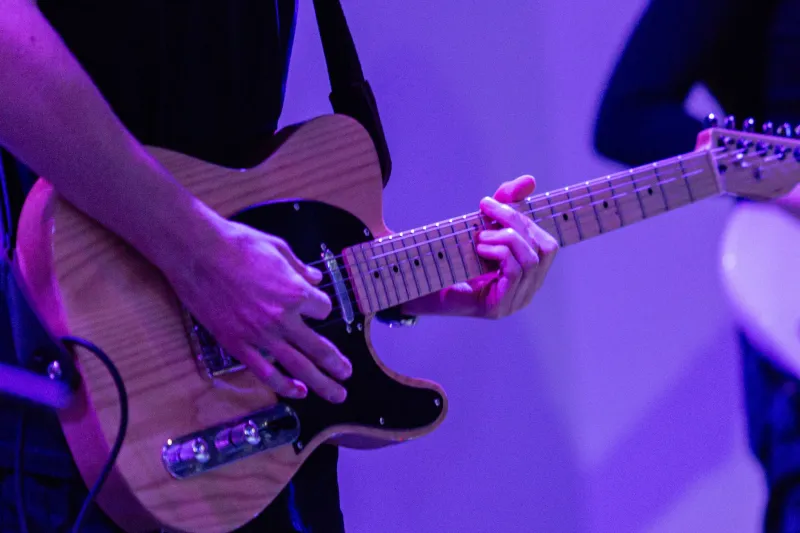
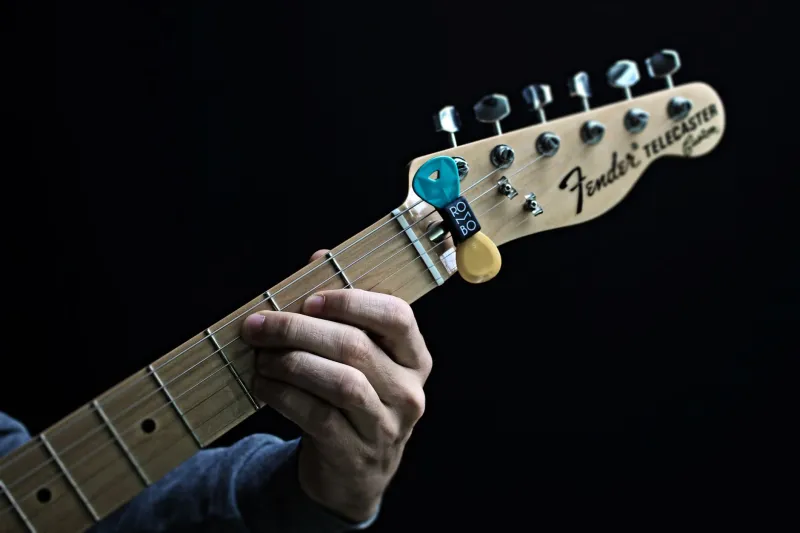
What's remarkable about all of this is how geographically specific the origin is. Wilko Johnson didn't emerge from a music school or a major city scene. He came from Canvey Island — flat, flood-prone, a bit forgotten — and that isolation arguably gave his playing its particular character. There was no local orthodoxy to conform to. No scene to impress. Just the music he'd absorbed from American R&B records and his own peculiar way of processing it through a battered Telecaster.
That outsider quality is exactly what garage rock keeps reaching for. The sense that the music was made somewhere unglamorous by someone who had nothing to prove to anyone. Wilko Johnson had it by accident of geography and circumstance. The bands who follow in his tradition are trying to manufacture it deliberately — and the smartest ones do it by going back to the source material and learning why it works.
So next time you hear a garage band tear into a two-note riff with that particular coiled, about-to-spring quality, take a moment. Somewhere in the genealogy of that phrase, there's a bloke from Canvey Island with a Telecaster and a stare that could cut glass. The riff, as it turns out, doesn't die. It just finds new mouths to speak through.