No Flash, All Fire: How 'Roxette' Became the Anti-Solo That Rewrote Rock's Rulebook
There is a moment in 'Roxette' where you expect the guitar to take flight. You've been primed by years of rock music to anticipate the climb — the bend that reaches for something celestial, the run of notes that announces a player flexing his muscles for the crowd. Wilko Johnson never gives you that moment. Instead, he gives you something rawer, more confrontational, and ultimately far more memorable: himself, unfiltered, playing like he has something urgent to say and absolutely no patience for decoration.
That choice — and it was absolutely a choice — turned 'Roxette' into one of the most quietly radical guitar performances in British rock history.
The Technique Behind the Tension
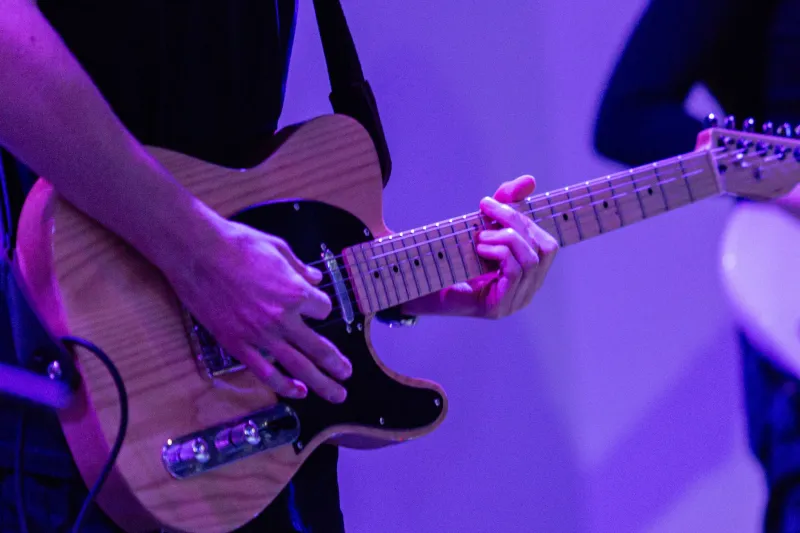
Wilko's approach on 'Roxette' is built on a foundation that looks deceptively modest on paper. He plays rhythm and lead simultaneously, his right hand doing the work of two musicians — chopping the strings in that choppy, staccato rhythm that became his calling card while his fingers pick out melodic lines that cut through the mix like a blade. There's no pick. There never was. Wilko used his fingers directly, which gave his playing a tactile immediacy that plectrum players simply couldn't replicate.
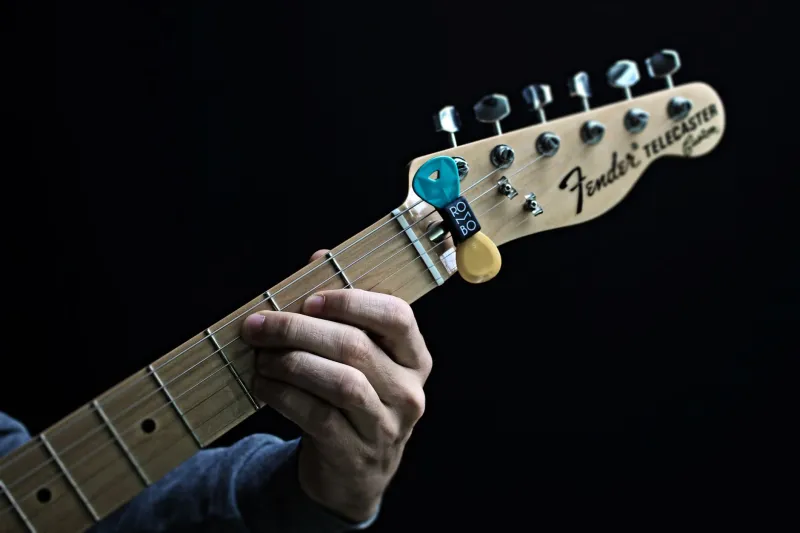
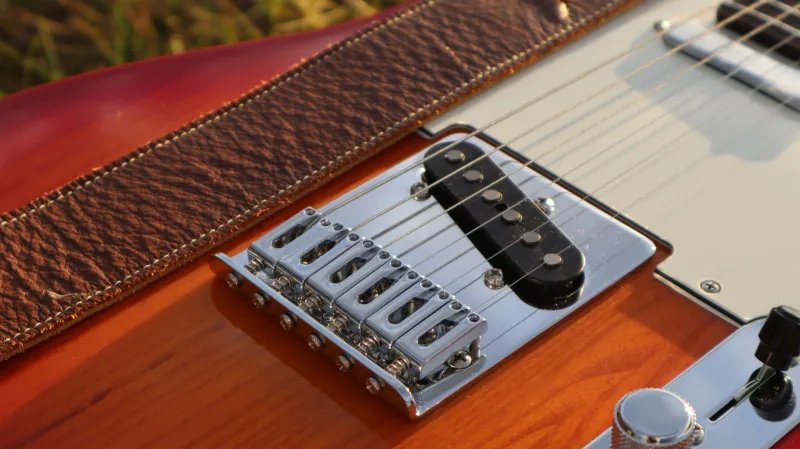
The tone is dry and cutting. There's no reverb washing things smooth, no delay padding out the spaces. The Telecaster — always the Telecaster — goes straight into the amp, and what comes out is the sound of a man who has nothing to hide and no interest in hiding it. Every slight imperfection, every percussive thwack of palm against string, is right there in the mix. It sounds almost confrontational in its honesty.
But here's what's easy to miss: the actual notes Wilko plays are sparse. There are gaps. Silences that most guitarists of the era would have filled reflexively, because silence felt like failure. Wilko understood something different. He understood that silence is where tension lives, and tension is where emotion lives. By refusing to fill every available space, he made each note land harder.
Ego at the Door
To understand why 'Roxette' hit so differently, you have to place it in context. By the mid-seventies, the dominant guitar culture in British rock was built around virtuosity as spectacle. Solos were events. They were the moment a crowd held its breath, the moment a guitarist proved himself worthy of the stage. Technical complexity had become almost morally loaded — the more notes you could play, the more seriously you were taken.
Wilko Johnson walked into that culture and basically told it to get stuffed.
His philosophy — and you can hear it crystallised in every bar of 'Roxette' — was that the guitar's job is communication. Not performance. Not demonstration. Communication. He wanted to make you feel something specific, not impress you with his dexterity. The moment a guitarist starts playing for the admiration of other guitarists rather than for the gut-punch reaction of a room full of people who just want to feel alive, something essential gets lost. Wilko never lost it.
This wasn't anti-intellectualism. Wilko Johnson is a famously well-read man, a student of literature and philosophy. His restraint was considered. It came from somewhere. He had looked at what the guitar could do at its most stripped-back and decided that was where the real power was. Not despite the limitations, but because of them.
The Ripple Effect
When punk arrived in 1976 and 1977, it arrived with a manifesto that looked, in many ways, like a formalised version of what Wilko had already been doing. The rejection of excess, the embrace of rawness, the idea that three chords played with conviction beat thirty chords played with detachment — these weren't new ideas. They were Canvey Island ideas, refined on pub stages in Southend and London long before the Pistols had plugged in.
Musicians who came up through punk and post-punk — and there were hundreds of them — absorbed Wilko's lesson without necessarily knowing his name. The idea that you could be a guitarist without being a guitar hero, that the instrument was a vehicle for something rather than an end in itself, filtered through into everyone from The Clash's Mick Jones to the entire lineage of British indie guitar playing that followed.
Ask any working British guitarist of a certain generation about 'Roxette' and watch the recognition flicker across their face. It's one of those performances that gets into you quietly, without announcement, and then turns out to have been shaping how you think about the instrument for years.
What He Left Out
The most instructive thing about Wilko's playing on 'Roxette' might be everything he chose not to play. No elaborate intro. No climactic solo that builds to a peak. No showboating coda. The song arrives, does its work with ferocious efficiency, and then it's done. The guitar is in service of the song's emotional truth — which is about desire and frustration and the particular kind of restless energy that Canvey Island seemed to breed — and the moment that service is complete, the guitar steps back.
This is harder than it sounds. The temptation to add, to embellish, to leave your fingerprints all over something is almost overwhelming for most musicians. Wilko resisted it absolutely. His ego, if he had one in the conventional rock star sense, never made it onto tape.
And that, more than any specific technique or tonal choice, is the lesson that 'Roxette' has been teaching guitarists for fifty years. Not how to play more. How to play less, and mean every single note of it.