Mud, Marshes and Mayhem: The Unlikely Story of How Canvey Island Gave Britain Its Most Dangerous Guitarist
There's something almost mythological about the idea of Canvey Island producing a rock and roll legend. Sitting low in the Thames Estuary, perpetually at risk of flooding, surrounded by oil storage tanks and industrial sprawl, it's not exactly the kind of place you'd expect to birth a musical revolution. And yet, from this peculiar corner of Essex, John Peter Wilkinson — the man the world would come to know as Wilko Johnson — emerged like some kind of electric storm given human form.
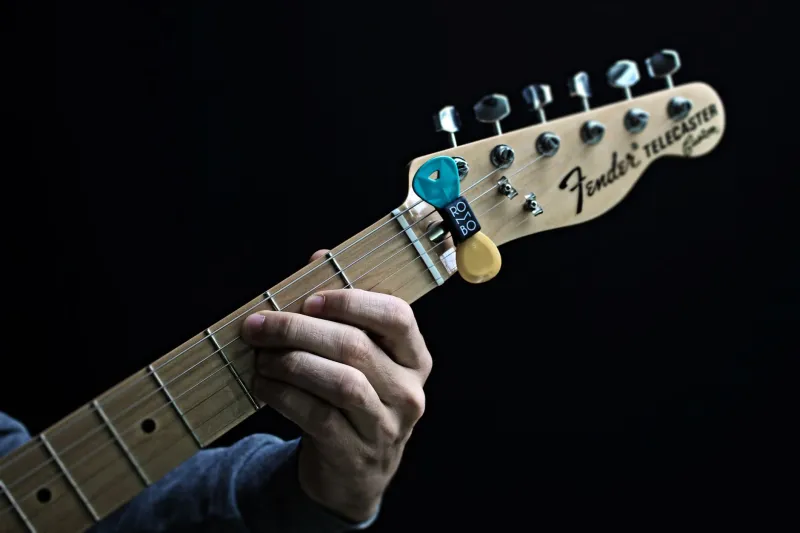
If you've ever felt the sheer, uncontainable thrill of watching Wilko stalk a stage, eyes wide and fixed on some invisible point in the middle distance, right hand hammering his Telecaster like it owes him money, then you already understand why we built this site. But how did he get there? How does a working-class lad from one of England's most overlooked corners end up becoming arguably the most viscerally exciting guitarist Britain has ever produced?
Growing Up on the Island at the Edge of the World
Wilko was born in 1947 and grew up in a Canvey Island that still bore the scars of the catastrophic 1953 North Sea flood, which killed 58 people on the island alone. It was a tight-knit community, hardened by hardship, and that toughness seeped into everything — including the music.
His early influences were classic American rhythm and blues: Howlin' Wolf, Bo Diddley, and above all, John Lee Hooker. He's spoken at length in various interviews over the years about the revelation of hearing that raw, repetitive, almost hypnotic guitar work for the first time. Where other kids his age were going daft for the Beatles, Wilko was digging deeper, chasing something rawer and more primal. That obsession with the roots of rock and roll would define everything that came after.
He studied English Literature at Newcastle University, which is itself an interesting wrinkle in the story — here's a man who could quote Chaucer and also make your teeth rattle with a single guitar chord. That literary sensibility never left him. His songwriting, when he eventually got round to it, had a sharpness and economy to it that set it apart from the blues-by-numbers approach of many of his contemporaries.
The Birth of Something Dangerous: Dr. Feelgood Takes Shape
The story of how Dr. Feelgood came together on Canvey Island in the early 1970s has been told many times, but it never gets old. Wilko, vocalist Lee Brilleaux, bassist John B. Sparks and drummer The Big Figure formed a band that looked and sounded like nothing else in Britain at the time.
While glam rock was all sequins and platform boots, Dr. Feelgood came on like a gang of threatening blokes you might encounter outside a pub in Southend on a Saturday night. They wore suits. They played short, sharp, furious rhythm and blues. And at the centre of it all was Wilko, cutting a figure so strange and compelling that audiences genuinely weren't sure what to make of him.
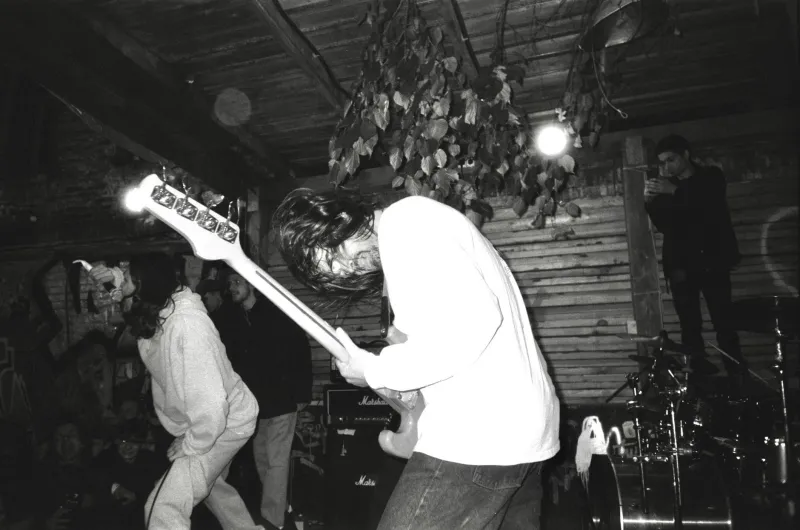
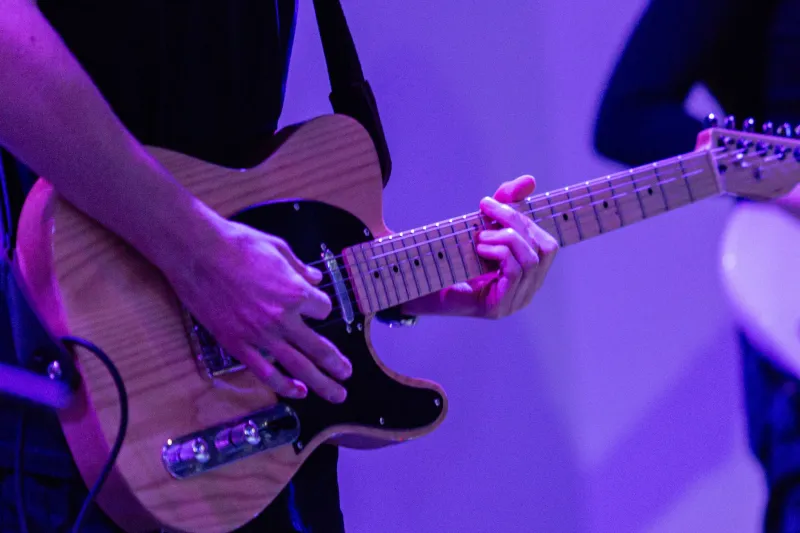
His guitar style — that extraordinary combination of rhythm and lead playing performed simultaneously, with no rhythm guitarist needed — was unlike anything British audiences had encountered. He'd developed a technique of playing with his fingers rather than a plectrum, using a choppy, percussive downstroke motion that gave the music an almost violent forward momentum. Watching him play was like watching someone conduct electricity.
Stupidity, the Album That Predicted Punk
When Dr. Feelgood released Stupidity in 1976 — a live album recorded at Sheffield and Southend — it shot straight to number one in the UK charts. That's worth sitting with for a moment. A raw, unpolished live rhythm and blues record from a band of Essex chancers going to number one. Britain was ready for something real.
The timing was no accident. Stupidity arrived just as punk was beginning to bubble up through the venues of London, and its influence on that movement cannot be overstated. The Clash, the Sex Pistols, the Jam — all of them absorbed what Dr. Feelgood were doing and ran with it. The stripped-back aggression, the working-class authenticity, the absolute refusal to be polished or palatable: these were the building blocks of British punk, and Wilko and Lee Brilleaux had assembled them first.
Paul Weller has spoken about the profound impact the band had on him. Joe Strummer was a known devotee. When you trace the lineage of British guitar music from the mid-1970s onwards, the lines keep running back to that stage at Canvey Island.
The Departure and the Solo Years
Wilko's departure from Dr. Feelgood in 1977 — acrimonious, complicated, and ultimately devastating for both parties — could have ended his story. Instead, it opened a new chapter. The Solid Senders, the Wilko Johnson Band, and his collaboration with Roger Daltrey on the acclaimed Going Back Home album in 2014 all demonstrated that his creative energy was essentially inexhaustible.
That Daltrey collaboration deserves special mention. When Wilko was diagnosed with terminal pancreatic cancer in 2013 and declined chemotherapy, choosing instead to tour and record while he still could, the outpouring of affection from the British public was enormous. The album they made together won the Q Award for Best Album. And then, in a twist that seemed almost too dramatic to be real, Wilko underwent surgery and was declared cancer-free in 2014. If his life were a novel, an editor would have cut that bit for being too convenient.
What the Legacy Actually Means
Wilko Johnson's influence on British music is both specific and diffuse. You can point to direct stylistic debts — the choppy, driving rhythm guitar that runs through post-punk and beyond — but his impact goes further than technique. He demonstrated that you could be strange, that you could be raw and uncompromising, that you could come from absolutely nowhere and still electrify a room.
In an era when British guitar music sometimes feels a bit polished and self-conscious, Wilko's legacy is a reminder of what the instrument can do when wielded with genuine ferocity and feeling. That's why we're here. That's why this site exists. Because the ecstasy of Wilko Johnson isn't just about one man's career — it's about what happens when music refuses to be anything other than completely, dangerously alive.
Here's to the Canvey Island Killer. Long may his Telecaster ring out.